Wooden platforms in West Berlin during the 1980s offered views over the Berlin Wall and into the East German-controlled “No Man’s Land”. Also known as the “death strip” this open area between the inner and outer areas of the Berlin Wall prevented East Berliners from escaping to West Berlin.
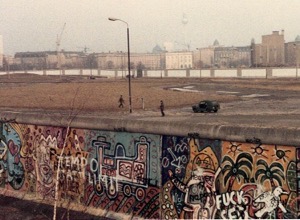
East German border guards monitored the “death strip” by patrolling the area on foot, in a vehicle, or from watchtowers. Floodlights, motion detectors, tripwires, alarm systems, mines, barbed wire and guard dogs helped to detect escape attempts.
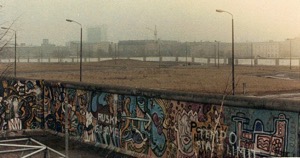
Besides all the surveillance equipment and security forces, the “death strip” was also home to Adolf Hitler’s Führerbunker. The Führerbunker is where Hitler spent his last days and died in 1945. If you examine the two pictures of the death strip, you will see a mound on the left side about 1/3 of the way from the top. The mound is the remnants of the Führerbunker.
The bunker remained buried and inaccessible until 1987 – 1989. Crews building residential housing and other buildings uncovered sections of the bunker. Damaged sections were filled and sealed, and other sections were destroyed. While the bunker was still standing, but before its scheduled destruction, Robert Conrad, a photographer, risked discovery by repeatedly sneaking into the dark bunker to capture photographs.
In the end, the old bunker complex was mostly destroyed during reconstruction. Any remains of the bunker lie underneath a parking lot. The few existing corridors remaining are sealed off from the public. In 2006, an information board was installed to mark the location of the bunker. Rochus Misch, who was in the bunker at the time of Hitler’s suicide, attended the ceremony of placing the information board.
Tags: Berlin, Berlin Wall, Death Strip, Führerbunker, Hitler, No Man's Land
 Terry Ebaugh
Leave a comment